Cyber Insurance vs General Liability Insurance Explained
Getting a clear picture of cyber insurance vs general liability insurance explained helps business owners protect their assets from two very different types of threats. While general liability covers physical accidents and bodily injuries, cyber insurance focuses on the digital fallout from data breaches and network hacks. Many entrepreneurs mistakenly believe their standard business policies offer protection against digital theft, but this often leads to significant gaps in coverage.
Understanding these distinctions early prevents financial ruin when a claim arises. This article provides the clarity you need to distinguish between these essential safety nets and ensure your company remains resilient against both physical and virtual liabilities.
Core Differences in Scope and Coverage
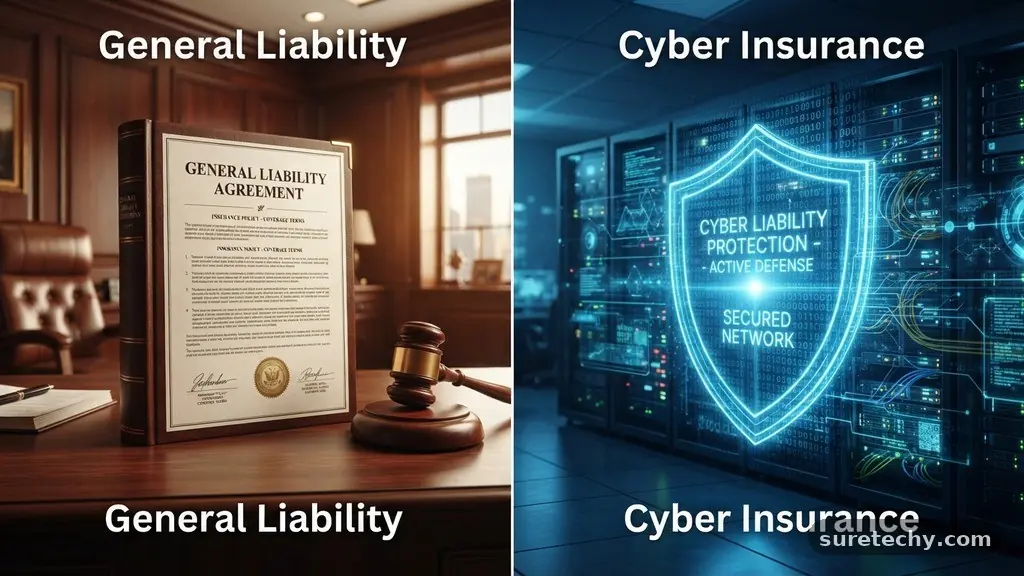
The fundamental difference between these two policies lies in the nature of the risk being managed. General liability, often called commercial general liability, is designed to protect your business against third-party claims of bodily injury or property damage.
If a client trips in your office or you accidentally damage a customer’s equipment, this policy covers the resulting legal fees and settlements. It is the bedrock of business insurance, focusing on tangible, physical events that occur during daily operations.
Cyber insurance, by contrast, targets the intangible realm of data and digital systems. It covers costs associated with data breaches, ransomware attacks, and failures in network security.
When sensitive client information is leaked, or your system is locked by hackers, cyber policies step in to cover the costs of notification, legal defense, and system recovery. While general liability keeps the lights on after a physical accident, cyber insurance ensures your business survives a virtual catastrophe.
These policies do not overlap in their primary functions. A standard general liability policy almost always contains an exclusion for electronic data and software corruption.
It does not pay for the forensic investigation required after a hack or the credit monitoring services you might owe to affected customers. Recognizing this gap is the first step in building a complete risk management strategy.
What General Liability Insurance Actually Protects
General liability insurance serves as a broad umbrella for common business risks. It is primarily concerned with what the industry calls “slip and fall” incidents.
If a visitor to your shop slips on a wet floor and breaks a wrist, your general liability policy handles the medical expenses and potential legal defense costs. It also covers claims of advertising injury, such as libel, slander, or copyright infringement occurring in your promotional materials.
These policies are standard across almost every industry, from retail and construction to consulting. They protect your balance sheet from the unexpected costs of accidents that happen on your premises or through your business activities.
For many small businesses, this is the first and only insurance they purchase. While vital, it is important to remember that it is not a catch-all solution for every type of financial loss.
It is rare for a general liability policy to cover damage to your own property, such as your laptops or servers. It is specifically designed to handle claims made against you by third parties.
If you are sued for negligence, this policy provides the legal counsel and indemnity needed to resolve the claim. It acts as a shield against the most predictable and common liabilities your business faces daily.
The Specifics of Cyber Insurance Protection
Cyber insurance addresses the unique vulnerabilities created by our reliance on digital infrastructure. When a business stores customer names, credit card numbers, or social security details, it assumes a massive responsibility.
A data breach can result in thousands of dollars in fines, legal fees, and reputational damage. Cyber policies are built to handle these specific modern expenses.
The coverage typically splits into two main areas: first-party and third-party protection. First-party coverage deals with the immediate costs your business incurs after a security incident.
This includes the price of hiring forensic experts to determine how the breach happened, the cost of notifying victims, and the expense of restoring your data from backups. It may even cover the ransom paid if you are hit by a malicious encryption attack.
Third-party coverage kicks in when you are sued by the people or companies affected by the breach. If a client sues you because their private files were stolen from your server, this portion of the policy covers your legal defense and any damages you are ordered to pay.
Given the increasing frequency of cyberattacks, this protection has become as essential as fire or theft insurance. You can find detailed resources on digital safety at the Cybersecurity and Infrastructure Security Agency.
Comparing Costs and Premiums
Determining the cost of these policies depends on factors unique to your business. General liability premiums are generally based on your industry, your location, and your annual revenue.
A construction company typically pays more than a software consultant because the risk of physical injury is significantly higher on a job site. These premiums are often predictable and stable over time.
Cyber insurance premiums, however, are highly sensitive to your internal security measures. Insurers evaluate your use of multi-factor authentication, your data backup procedures, and your employee training programs.
If you have a weak security posture, your premiums will reflect that higher risk. The cost can fluctuate significantly based on the current threat landscape and the amount of sensitive data you handle.
The table below provides a general look at how these two types of insurance differ in their focus and cost factors.
| Policy Type | Primary Focus | Typical Cost Drivers |
|---|---|---|
| General Liability | Physical injury & property damage | Industry type, revenue, location |
| Cyber Insurance | Data breaches & system failures | Security protocols, data volume, industry |
Why One Does Not Replace the Other
A common misconception is that a comprehensive general liability policy covers everything. This thinking creates a dangerous vulnerability.
If you rely solely on general liability, a single ransomware attack could force you to pay for forensic IT services, legal counsel, and regulatory fines out of your own pocket. These costs can easily reach hundreds of thousands of dollars, far exceeding the coverage provided by a standard liability policy.
Conversely, cyber insurance does not protect you from a lawsuit if a client slips and falls in your lobby. It is strictly limited to digital and network-related incidents.
Attempting to use a cyber policy to cover a physical injury claim would result in an immediate denial of coverage. You need both to ensure there are no holes in your protection.
Businesses must treat these as complementary rather than competitive products. They exist to cover different categories of risk that rarely intersect.
By maintaining both, you protect the physical integrity of your office and the digital integrity of your data. This dual approach is the standard for modern, responsible business management.
Common Claims and Scenarios
To understand the difference, consider a few real-world scenarios. In a general liability case, a customer might claim that your signage caused them to trip, leading to a lawsuit for medical bills.
This is a classic claim that the insurance provider handles through your general liability policy. It involves physical presence, tangible injury, and a clear third-party liability.
In a cyber insurance scenario, an employee might accidentally click a phishing link, granting hackers access to your customer database. The hackers then demand a ransom to unlock your files and threaten to release private client information.
Your cyber insurance policy would cover the cost of the ransom negotiation, the forensic investigation to stop the breach, and the legal fees associated with mandatory data breach notifications. These two scenarios require entirely different responses and resources.
Most businesses will encounter a mix of these risks over their lifetime. A retail store, for instance, needs general liability to cover the physical shop floor and cyber insurance to protect the point-of-sale system that processes credit cards. Managing these risks separately ensures that you have the right experts and the right financial backing for every type of incident.
Key Considerations Before Purchasing
Before you commit to any policy, you must review the specific exclusions. General liability policies almost always exclude professional errors and cyber incidents.
Cyber policies, meanwhile, often exclude losses related to the failure of third-party cloud providers unless specific riders are added. You must read the fine print to know exactly what is and is not included.
Another important factor is the limit of liability. A policy that covers only $100,000 may be insufficient if you handle millions of records.
You should assess the potential cost of a worst-case scenario, including legal fees and potential regulatory fines. Work with an experienced broker who can help you tailor these limits to the specific size and risk profile of your business.
Consider the following list of factors to evaluate when shopping for coverage:
- The total volume of personally identifiable information (PII) you store.
- The physical foot traffic your business location receives daily.
- Existing security measures like encryption and regular data backups.
- The potential for business interruption if your systems go offline.
- Contractual requirements from partners or vendors who may mandate specific insurance limits.
Frequently Asked Questions
What does cyber insurance not cover?
Cyber insurance typically does not cover the loss of future profits or the loss of intellectual property value. It also rarely covers costs resulting from a company’s failure to maintain basic security standards that were promised in the policy agreement.
How much does a standard liability policy cost?
The cost varies widely based on your industry and location, but many small businesses pay between $500 and $2,000 annually for a standard general liability policy. High-risk industries, such as construction, will see significantly higher premiums.
Is it worth getting cyber insurance for a small business?
Yes, it is often critical. Small businesses are frequently targeted by hackers because they often have weaker defenses than large corporations. A single breach can be enough to bankrupt a small business without the safety net of insurance.
What does cyber insurance actually cover in a ransomware attack?
It covers the costs of investigating the incident, restoring data from backups, and potentially the ransom payment if it is deemed the most viable path to recovery. It also covers the legal costs associated with regulatory reporting and notifying affected customers.
Can I bundle general liability and cyber insurance?
Many insurers offer “Business Owner’s Policies” or “BOPs” that bundle general liability with other coverages. However, cyber insurance is often sold as a standalone policy or a separate rider to ensure the coverage limits are high enough for the specific digital risks involved.
Final Thoughts on Business Protection
Protecting your business requires a multi-layered approach to risk management. Understanding the distinction between cyber insurance vs general liability insurance explained helps you allocate your budget effectively.
You cannot afford to leave your digital assets exposed, nor can you ignore the physical risks of operating a public-facing business. By securing both types of policies, you create a robust safety net that allows you to focus on growth rather than fear.
Start by auditing your current coverage and identifying any gaps. Talk to your insurance provider about your specific business model and the risks you face daily.
Ensuring you have the right protection in place provides peace of mind that your hard work won’t be undone by a single accident or digital attack. Take the time to get this right today, and your business will be better positioned to handle the challenges of tomorrow.